
A decision is only made when you take action. Until then it is just unrealised intention.
Why momentum matters more than confidence when you’re changing direction


Most pivots do not fail because the idea is wrong. They fail because people wait too long to begin.
When you are pivoting, the biggest mistake is waiting. Waiting until you feel ready. Waiting until the plan is perfect. Waiting until you know exactly what you are going to say, or do, or how it is all going to work.
That moment never really comes.
The uncomfortable truth is that when you know you need to change direction, you already know enough to begin.
In television, that is very much where we are. As an industry, we all know what needs to happen. We have to make digital work, creatively and commercially. That part is not mysterious. What usually follows, though, is a long list of maybes.
Maybe we should start a podcast.
Maybe we should build a YouTube channel.
Maybe TikTok. Maybe Instagram.
All of those might be true. None of them matter if they stay hypothetical.
The only thing that actually moves you forward is starting. Not because you are confident it will work, but because it is the only way you learn what might work.
That is true of any pivot. You act first, knowing some things will fail, some things will surprise you, and most things will look very different in practice than they did in your head. But action is the moment an idea turns into a decision, and a decision is what creates momentum.
That is the mode we are in right now. We are making things we have not made before. A podcast we believe in, but have never tested. New channels that may or may not monetise in the way we hope. Small bets, imperfect starts, real movement.
Standing still is the only option that guarantees nothing changes.
Television is not dead, it is changing shape
Interestingly, this has also been a week where linear television has been more front and centre than our digital work.
That raises a real question. How much time should you allocate to digital? How much to linear? And how important is television now, really?
For us, television is still a very significant part of the business. Series are still being commissioned. People are still watching them, just in slightly different ways.
One of the most interesting examples from the last year or so is Virgin Island. When it launched on Channel 4 last April, it was a flop by traditional measures. Not a slow burn. A proper miss.
Then something unexpected happened.
Young people started filming themselves watching it, peeking through their fingers, saying they could not believe what they were seeing. Those clips went onto TikTok. TikTok then drove a huge audience to Channel 4’s on demand platform, which turned the show into one of Channel 4’s biggest hits of the year.
What TikTok did for Virgin Island is exactly what it often does for YouTube. Steven Bartlett is a good example of this. Hundreds of short clips from Diary of a CEO circulate on TikTok and Instagram. Those platforms act as marketing engines, pushing people towards YouTube, which then pushes people towards the full podcast.
What this shows is that traditional media and modern media are no longer separate worlds. They increasingly support each other. Linear TV is not operating in a vacuum.
The Traitors is another strong example. It already has a massive audience, but it uses social media brilliantly to extend the conversation long after the episode finishes. Television still offers something very few other formats can deliver at scale, which is event. Shared experience. Cultural moments.
TV is not dead. It is adapting.
Rethinking how we develop ideas
This week we have also been looking hard at how television development actually works.
In most businesses, you start by identifying a clear problem and then build a product or service to solve it. You want to stay somewhere affordable for a short period of time in your own space, Airbnb solves that. You want to control your heating while driving home on the motorway, smart thermostats solve that.
Broadcasting works differently. Broadcasters absolutely have problems that need solving, but the way we develop ideas does not always start there. More often it starts with instinct, taste, relationships, or a sense of what might be interesting.
So we tried something more direct.
Last Thursday, we spoke to a broadcaster and asked them a very simple question. What is the number one problem you are trying to solve in this slot right now?
We asked them to brief us on that problem. Then we put another date in the diary for seven days later. We told them that in a week we would pitch three or four ideas designed specifically to solve that issue, and that is all we would work on in that period.
That was the brief. Nothing else.
It is a more entrepreneurial way of approaching development. Focused, specific, and problem-led. In truth, it is what we often end up doing anyway, but rarely in such a disciplined way.
We followed up earlier this week and it has gone very well. It has also helped deepen the relationship, which is just as important as the ideas themselves.
Digital momentum and small but real wins
On the digital side, we have had two brands offer us money this week to make videos with talent on a YouTube channel.
It is not huge money. We are talking four figures, not five. Probably not enough to fully cover the work. But it is a start, and you have to start somewhere. These are major brands, and directionally it matters.
We also recorded another episode of a podcast this week, which went extremely well. Very enjoyable, very energising. That will launch in about five or six weeks.
Alongside that, we have had a couple of commissions come in that I cannot talk about yet, but which we are genuinely delighted by.
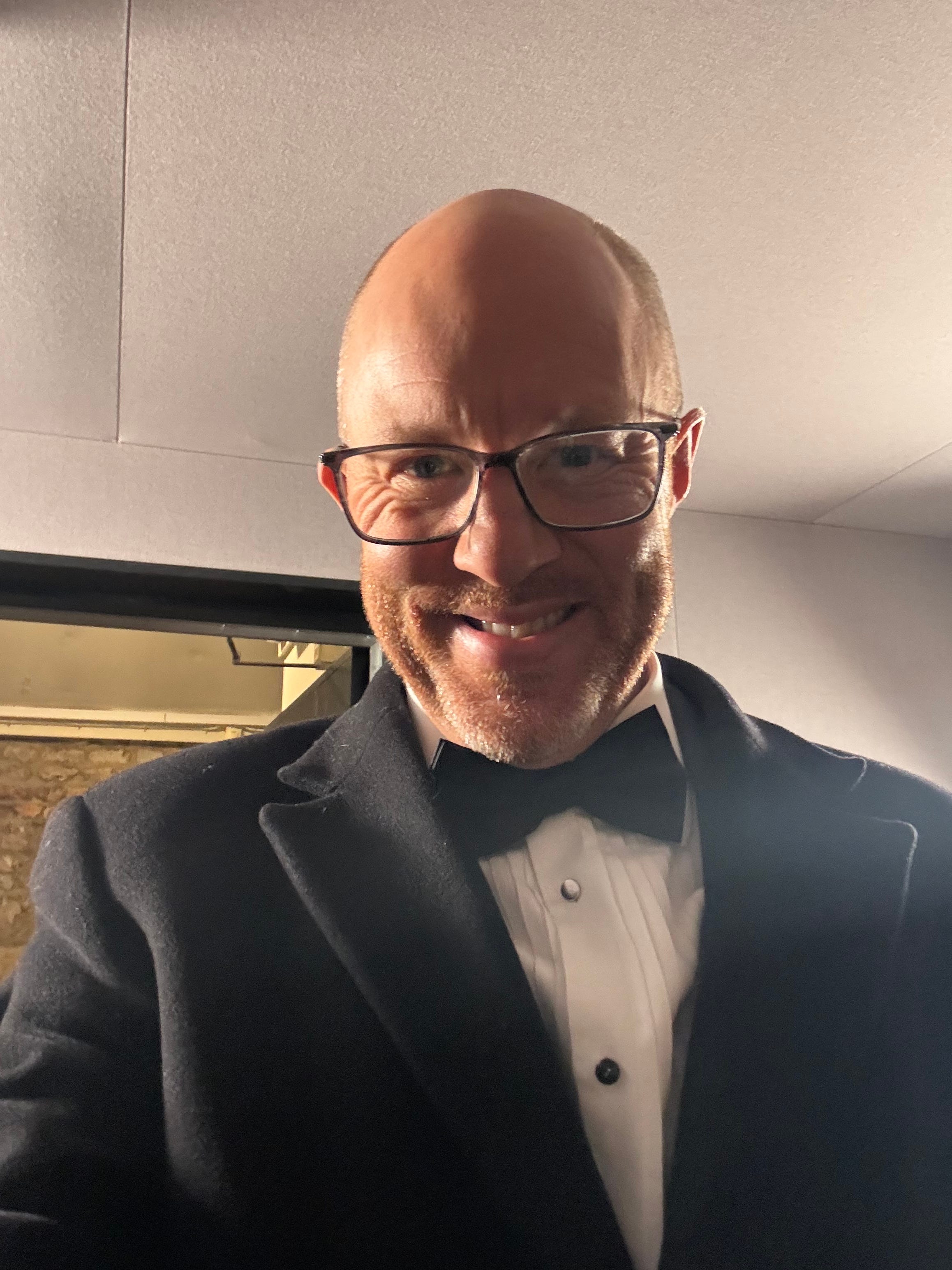
The week finished at the Broadcast Awards, which are always a good night. Huge thanks to Racoon for inviting us to their table. The mood was positive, upbeat, and celebratory. It did not feel like Edinburgh did a couple of years ago, when everything felt heavy and bleak.
It felt like things were moving again.
I do wonder whether we will start to see a digital category added in future years. Projects like Time Team, now operating as a YouTube channel funded through Patreon subscriptions, feel increasingly relevant. The BBC leaning more seriously into YouTube only underlines that shift.
You can feel consolidation happening, but you can also feel opportunity.
Why this still feels exciting
My feeling at the end of the week is genuinely positive.
If television can work hand in hand with social media, it offers the best of both worlds. Longform content that creates moments and conversation, with a second life on new platforms that keeps it alive and relevant.
Another reason I am cheerful is that one of the things I have always loved about television is the process. Coming up with ideas. Talking to people. Making things. That part has always been fascinating. This week I spent a great hour chatting with Jen Topping who I first met as part of Channel 4”s Emerging Indie Fund Scheme - if anyone has a clear idea of the digital frontline, I’d say it’s her
We discussed how exciting it is now that a new frontier has opened up alongside linear TV. Digital feels messy, uncertain, and occasionally frustrating, but it is also energising. A modern gold rush where some people are learning how to extract value and others are still standing on the sidelines.
We both agreed that being in the middle of that, getting your hands dirty and figuring it out in real time, is actually fun.
And if it is not fun, if it is not interesting, if it does not feel like an adventure, then honestly, why bother?
 | A guest post by
|
Ed, I totally agree with you. Our TV landscape is changing and we can either adapt or be left behind. I am heading to MIP this week, if you are there be fab to catch up. If not I would be happy to share my findings on the digital revolution (I will be taking notes the old fashioned way!)
Thanks! Wont be there but have a great time!!